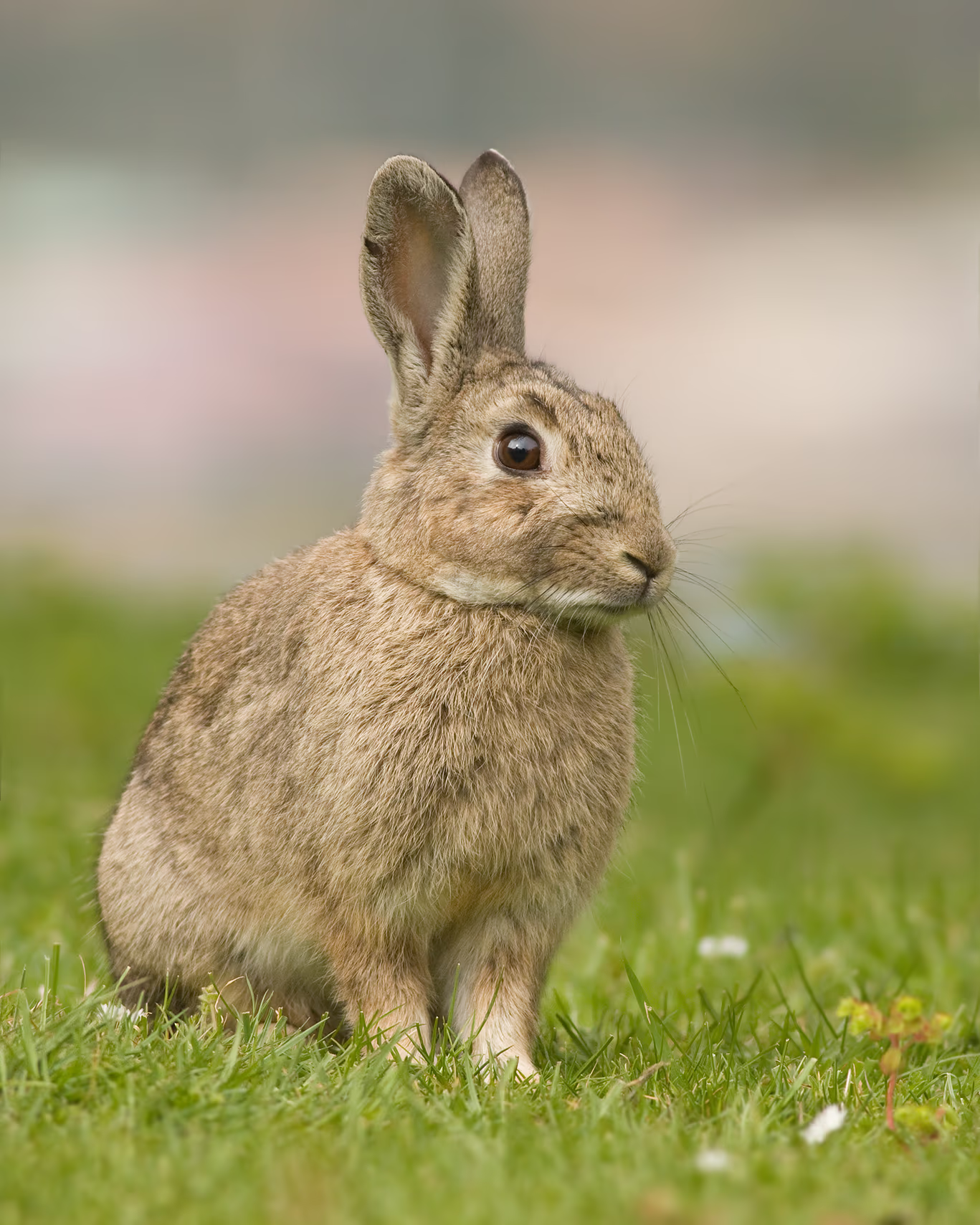
Rabbits
High-precision herbivore whose biology continues to fascinate researchers
The domestic rabbit (Oryctolagus cuniculus) descends from the European wild rabbit, native to the Iberian Peninsula and North Africa. Its domestication began in the Middle Ages, likely in French and Spanish monasteries where monks raised it for food, benefiting from a decision by Pope Gregory I (5th–6th century) classifying newborn rabbits (laurices) as "fish" consumable during Lent.
Read more (217 mots)Show less▾
This monastic origin partly explains why France retains one of Europe's most developed rabbit-farming traditions.
Recognition of the rabbit as a pet is a relatively recent phenomenon, accelerated in the 1980s–1990s with the spread of dwarf breeds selected for pedomorphic traits (small size, large ears, shortened muzzle). Today, the rabbit is the third most common pet in France after the dog and cat, with an estimated population of 7–9 million individuals.
Indeed, the rabbit is an animal with remarkable cognitive and behavioral abilities. Studies from the University of Edinburgh have documented its ability to solve multi-step problems to access food, and its behavioral signal repertoire—binkies (joy jumps), thumps (foot-tapping warnings), grooming and tooth purring (social licking)—constitute an elaborate communication system.
Breed diversity is considerable: the Flemish Giant can reach 8–10 kg, while the Dutch Dwarf or Dwarf Lop cap out at 1–1.5 kg. Life expectancy regularly reaches 10–12 years in neutered rabbits, properly fed and monitored by exotic veterinarians.
Overview
0.8–30 kg
Weight range
min ↔ max documented
7–12 ans
Life expectancy
all ages
Medium
Majority size
41 breeds of 50
100%
Suited for apartments
referenced breeds
Distribution by size
Ideal profile
What should good food contain for rabbit ?
Nutritional ranges validated by our team. These are the ranges our PawScore considers ideal.
Rabbit pellets
- Protein12–16%
- Fat2–4%
- Fiber18–25%
- Calories200–300kcal
Values outside the range are not dangerous, but slightly reduce the PawScore according to our methodology.
By build
Choose by size
The #1 criterion when choosing a breed — space needed, transport, budget.
Discover
The essentials
A selection to start your exploration of rabbits.

Alaska (rabbit)
rabbit breed

Angora
Pet rabbit with curious temperament.

French Angora
rabbit breed

Champagne d'Argent
Breed of rabbit.

Saint Hubert Silver
The Saint-Hubert Silver is a breed of domestic rabbit resulting from a cross between rich or silver rabbits from Champagne and Belgian hare rabbits.
Lifestyle
Space and Freedom of Movement
Read more (205 mots)Show less▾
The rabbit is an animal that naturally travels several kilometers per day in its wild environment. The cage is now formally discouraged by animal welfare organizations: it leads to musculoskeletal disorders, behavioral stereotypies, and chronic obesity. The recommended alternative is a spacious enclosure of at least 3 × 2 m floor area, supplemented by daily supervised access to a secure room or garden.
Socialization
The rabbit is a social species that, in nature, lives in hierarchical groups. Solitary living constitutes significant environmental impoverishment. Neutering of both individuals is essential before any cohabitation. Introduction proceeds progressively, on neutral ground, over several weeks.
Daily Activity
The rabbit is crepuscular, with peaks of activity at dawn and dusk. It alternates intense play phases (gallops, jumps, tooth purring) and long rest periods. Cognitive stimulation toys—food puzzles, tunnels, dig boxes—prevent boredom. Prolonged apathy is the first signal of underlying pain.
Nutrition
Cecal Fermentation Herbivore
Read more (250 mots)Show less▾
The rabbit is a strict herbivore whose digestive system relies on remarkably efficient cecal fermentation. The cecum represents 40% of total digestive volume. It hosts billions of microorganisms capable of fermenting cellulose and extracting volatile fatty acids, microbial proteins, and B and K vitamins.
The cecotrophy process is the cornerstone of nutrition: two types of feces are produced—hard pellets and cecotrophs (soft, protein-rich), directly ingested by the animal.
Hay: Primary Food, Non-Optional
Quality hay (timothy, orchard grass, meadow) must constitute 80 to 90% of the ration by volume, continuously available. Long fibers fulfill two functions: wear of continuously growing teeth (0.8–1.2 cm/month) and transit regulation. A fiber-poor ration leads to dental malocclusion and gastro-intestinal stasis (fatal veterinary emergency in 24–48 hours).
Fresh leafy green vegetables (romaine, endive, parsley, cilantro, basil) complement the ration. Pellets are optional (1% of body weight/day). Fruits are occasional treats (10 g, 2–3 times/week).
Toxic Foods
Avocado (persin) causes cardiac and pulmonary lesions. Garlic, onion, shallot cause hemolytic anemia. Nightshades (tomato leaves, potato) contain neurotoxic alkaloids.
Care
Dental Care: Absolute Priority
Read more (212 mots)Show less▾
Rabbit teeth are hypsodont (open-rooted, continuously growing)—28 teeth total. Lateral mastication by long fibers ensures their wear. The exotic veterinarian should check dental occlusion annually, malocclusion being the most common pathology, particularly in dwarf breeds.
Grooming and Molting
Rabbits molt 2 to 4 times per year. Daily soft brushing is imperative during molts: unlike cats, rabbits cannot vomit and hair accumulations in the stomach cause obstructions. Ears should be inspected weekly for ear mite (Psoroptes cuniculi).
Preventive Veterinary Care
In France, vaccination against RHD (two strains: classic and RHDV2) and myxomatosis is strongly recommended. Initial vaccination at 5–6 weeks, annual boosters. Neutering is recommended at 4 months for females—the risk of uterine cancer reaches 60–80% in unspayed females over 5 years old.
Warning Signals
Anorexia lasting more than 12 hours constitutes an absolute veterinary emergency. Other signals: dyspnea (mandatory nasal oxygen), liquid diarrhea, torticollis, sudden lethargy.
Family tree · phylogeny
Rabbit morphology by ear type & size
Rabbits are classified into two major families based on ear posture (straight or lop), with size variability from dwarf to giant.
ExploreShow less
Family tree · phylogeny
Rabbit morphology by ear type & size
Rabbits are classified into two major families based on ear posture (straight or lop), with size variability from dwarf to giant.
Rabbits are classified into two major families based on ear posture (straight or lop), with size variability from dwarf to giant.
Dwarf with straight ears
Small size (< 2 kg), erect ears. Very popular as companions.
5 breeds
Dwarf Lops
Small breeds with lop ears — ultra expressive face.
3 breeds
Standards
Medium sizes (2-4 kg), short-haired breeds, athletic body.
6 breeds
Standard Lops
Medium body (2.5-4.5 kg), long drooping ears.
3 breeds
Giants
Over 5 kg, calm and affectionate despite their size.
4 breeds
Dwarf with straight ears
Small size (< 2 kg), erect ears. Very popular as companions.
5 breeds
Dwarf Lops
Small breeds with lop ears — ultra expressive face.
3 breeds
Standards
Medium sizes (2-4 kg), short-haired breeds, athletic body.
6 breeds
Standard Lops
Medium body (2.5-4.5 kg), long drooping ears.
3 breeds
Giants
Over 5 kg, calm and affectionate despite their size.
4 breeds
Filled chips = file available · Dotted = documented breed not yet referenced
What if your next companion was already waiting for you? Many shelter rabbits are of an identifiable breed — every adoption is a new life beginning. Meeting in a shelter is often the love of a lifetime.
Alert
To avoid for rabbit
Our database lists toxic ingredients and problematic additives by species.
- PotatoModerate
- caffeineLow
- bitter almondHigh
- titanium dioxideHigh
Rankings
Find the right rabbit
Thematic selections to guide your choice based on your lifestyle.
The best animals for small budgets
Companions with reasonable maintenance costs — from hamster to dwarf rabbit.
See the rankingThe best animals for children
Gentle, sturdy, and easy to handle companions.
See the rankingMedium rabbit breeds
43 breeds ranked by size
See the rankingSmall rabbit breeds
3 breeds ranked by size
See the rankingDwarf rabbit breeds
3 breeds ranked by size
See the rankingRabbits with the longest lifespans
Maximum documented lifespan — 12 years for the Angora
See the rankingOur catalog rabbit
Daily update47
Referenced products
70/100
Average PawScore
2%
Rated excellent
1 produits
—
Organic products
—
Distribution by category
Complete catalog
All breeds of rabbits
50 pages · filter by size, energy, lifestyle.
Next step
The right meal for your rabbit.
SokoScan calculates a personalized PawScore based on breed, age and sensitivities. Free, instant.


