Birds
Creatures of the air whose social intelligence reshapes our certainties about cognition
Aviculture has traversed millennia of human civilization. Parrots were already present in the palaces of ancient India; Alexander the Great brought back Rose-ringed Parakeets (Psittacula eupatria) from his Indian campaigns in the 4th century BCE. Canaries, domesticated from the Canary Islands serin, were introduced to Europe in the 15th century.
Read more (204 mots)Show less▾
The term "pet bird" encompasses considerable taxonomic diversity: psittacids (parrots, parakeets, cockatoos, macaws), passerines (canaries, Gouldian finches). Each family imposes radically different behavioral and health requirements. Psittacids are remarkable for their longevity — the Sulphur-crested Cockatoo exceeds 80 years in captivity, the Blue-and-yellow Macaw 50–60 years — and their cognitive abilities comparable to those of higher primates.
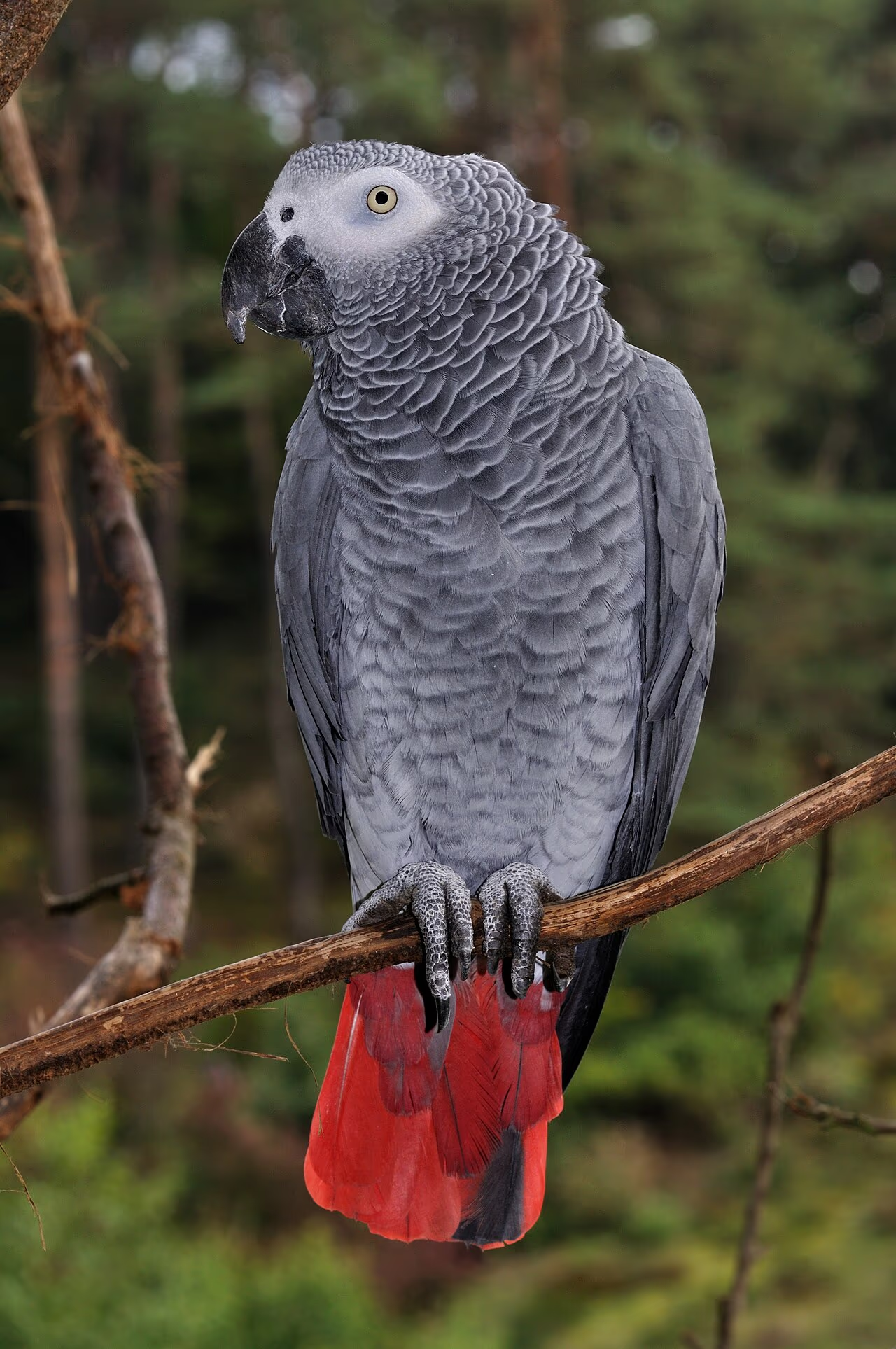
Pioneer work by Irene Pepperberg with Alex, an African Grey Parrot followed for 30 years at MIT, revolutionized understanding of avian intelligence: Alex mastered over 150 functional words, categorized by color/shape/material, understood the concept of zero. These capacities rest on a pallium whose neuronal density exceeds that of mammals of comparable size.
In France, the most commonly kept birds are the Budgerigar and the Canary, followed by the Cockatiel and Gouldian Finch. Possession of CITES species (Annex I) requires documented captive-bred certificates.
Overview
0.0–2 kg
Weight range
min ↔ max documented
8–30 ans
Life expectancy
all ages
Very small
Majority size
5 breeds of 14
100%
Suited for apartments
referenced breeds
Distribution by size
Ideal profile
What should good food contain for bird ?
Nutritional ranges validated by our team. These are the ranges our PawScore considers ideal.
Bird seed
- Protein12–20%
- Fat4–10%
- Fiber3–8%
- Calories280–400kcal
Values outside the range are not dangerous, but slightly reduce the PawScore according to our methodology.
By build
Choose by size
The #1 criterion when choosing a breed — space needed, transport, budget.
Discover
The essentials
A selection to start your exploration of birds.

Ara
Bird companion requiring interaction and stimulation.

Cacatoès
Companion bird requiring interaction and stimulation.

Calopsitte
Companion bird requiring interaction and stimulation.

Canari
Companion bird requiring interaction and stimulation.

Conure
Companion bird requiring interaction and stimulation.
Lifestyle
Socialization and relational needs
Read more (215 mots)Show less▾
Nearly all psittacid species are highly social, living in flocks of dozens to thousands of individuals. Solitary captivity is a chronic stress factor: feather plucking, self-mutilation, repetitive vocalizations. For owners unable to guarantee several hours of daily interaction, life as a pair is strongly recommended.
Habitat and enrichment
For a Budgerigar, the cage must permit horizontal flight over 90 cm minimum; for an adult African Grey, 90 × 90 × 120 cm with daily opening of at least 3 hours. Varied perches in diameter and texture (natural wood, cork, sisal) to prevent pododermatitis (bumblefoot).
Enrichment must be refreshed: destructive toys (wood, natural leather), foraging toys, mirrors, weekly baths. A bird without enrichment develops stereotypies in less than 6 weeks.
Vocalization and learning
Vocal mimicry in psittacids is an adaptation to social communication in dense forest. Learning peaks between 6 months and 3 years for most species. Regular sessions of 10–15 minutes with clearly pronounced words associated with repetitive contexts.
Nutrition
Ideal nutrition for psittacids
Read more (228 mots)Show less▾
The diet exclusively based on seeds is now recognized as the principal factor of premature mortality in captive parrots. Current recommendation by avian veterinarians: base of extruded pellets (40–50%), fresh vegetables (30–40%: broccoli, carrot, bell pepper, kale), limited fresh fruits (10%), seeds/nuts/legumes as treats (10%). Sunflower seeds should not exceed 5% of the diet.
Vitamin A deficiencies are the most frequent nutritional pathologies in seed-fed parrots: chronic sinusitis, choanal abscesses, dull plumage, immunosuppression. Orange and dark green vegetables = best sources of beta-carotene.
Nutritional diversity between species
Granivorous passerines (canaries, Gouldian finches) require a seed mix (millet, canary seed, niger seed, rape seed), fresh vegetables, hard-boiled eggs chopped during molt, and minerals (cuttlebone for calcium).
Toxic foods
Avocado (all varieties and parts) — lethal due to persin (pulmonary edema, myocarditis). Chocolate, caffeine, alcohol, excess salt, fruit pits (amygdalin, cyanide precursor) strictly prohibited. Cooking fumes from Teflon (PTFE) are acutely lethal from 250°C.
Care
Cage hygiene
Read more (178 mots)Show less▾
The floor must be cleaned daily and disinfected weekly (citric acid or diluted hydrogen peroxide — phenolic and quaternary disinfectants are toxic). Perches and toys washed each week. Water is changed at least twice daily, ideally in a valve drinker.
Plumage care
Bath 2–3 times per week (shallow basin of warm water or spray). Canaries bathe spontaneously; psittacids may require training. Nails and beaks wear on varied perches, veterinary trimming if sedentary.
Veterinary monitoring and alert signs
Birds naturally hide signs of illness (anti-predator behavior). When a bird shows visible signs (prolonged fluffing, half-closed eyes, soiled vent, dyspnea, resting posture on ground), the pathology is often advanced. Annual avian veterinary consultation mandatory with blood work (hematology, Chlamydia psittaci screening). Psittacosis is a zoonosis transmissible to humans.
What if your next companion was already waiting for you? Many shelter birds are of an identifiable breed — every adoption is a new life beginning. Meeting in a shelter is often the love of a lifetime.
Alert
To avoid for bird
Our database lists toxic ingredients and problematic additives by species.
- saltModerate
- mistletoeLow
- caffeineLow
- bitter almondHigh
Rankings
Find the right bird
Thematic selections to guide your choice based on your lifestyle.
The best animals for small budgets
Companions with reasonable maintenance costs — from hamster to dwarf rabbit.
See the rankingThe best animals for children
Gentle, sturdy, and easy to handle companions.
See the rankingMedium bird breeds
4 breeds ranked by size
See the rankingVery small bird breeds
5 breeds ranked by size
See the rankingSmall bird breeds
4 breeds ranked by size
See the rankingBirds with the longest lifespans
Maximum documented lifespan — 30 years for the Cockatoo
See the rankingOur catalog bird
Daily update56
Referenced products
63/100
Average PawScore
2%
Rated excellent
1 produits
—
Organic products
—
Distribution by category
Complete catalog
All breeds of birds
14 pages · filter by size, energy, lifestyle.
Next step
The right meal for your bird.
SokoScan calculates a personalized PawScore based on breed, age and sensitivities. Free, instant.


