
🐟 Fish · size Very small
Néon
Aquarium fish with specific biotope.
Photo · Corpse89 (CC BY-SA 3.0)
Weight
1–2 g
Size
Very small
Lifespan
3–8 ans
Energy
Faible
Maintenance
Faible
Training
Faible
Neon is the chemical element with atomic number 10, symbol Ne. Its name is derived from Greek νέος / neos, 'new'. In the periodic table of elements, it is found in the 8th main group, or the 18th group of the IUPAC, and therefore belongs to the noble gases. Like other rare gases, it is a colorless, extremely inert and monatomic gas.
Read more (145 mots)Show less▾
For many properties such as melting and boiling points or density, it is between helium, which is lighter, and argon, which is heavier. Neon is one of the most abundant elements in the universe, but it is relatively rare on Earth, because, like helium, much of the gas has escaped into space. It is found mainly in the Earth's atmosphere, of which it is one of the trace gases; only small quantities are trapped in rocks. Like krypton and xenon, neon was discovered in 1898 by William Ramsay and Morris William Travers by fractional distillation of liquid air. The most well-known applications are fluorescent tubes or neon lamps, in which neon is excited by electrical discharges to glow with a typically reddish-orange color.
Compatibility
Profile
At a glance
Energy
Faible
Trainability
Faible
Maintenance
Faible
Indicative profile — every animal is an individual.
⚡ Key facts in 30 seconds
L'essentiel
- 1Tiny size (0.001–0.002 kg) — ideal for apartment and easy transport.
- 2Life expectancy: 3 to 8 years on average, depending on hygiene and diet.
- 3Low need for exercise — suits less active people.
- 4Minimal grooming — little shedding, occasional brushing.
Chapter 1
Getting to know the Néon
Our selection
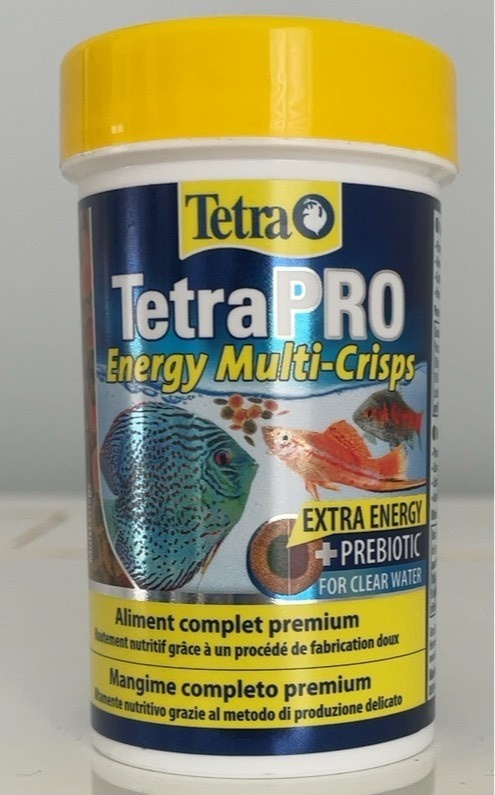
Dry food suited to the Néon

Origins & history
A story told
In 1894, John William Strutt Rayleigh and William Ramsay discover argon, the first noble gas. In 1895, Ramsay also isolates helium, previously known only in the solar spectrum, from uranium ores. According to the laws of the periodic table, he recognizes that there must be another element between helium and argon with an atomic mass of about 20 u. From 1896, he therefore begins to study various minerals and meteorites as well as the gases they emit when heated or dissolved. However, Ramsay and his colleague Morris William Travers fail to achieve conclusive results, and manage to find only helium and, more rarely, argon. They then investigate the hot gases from Cauterets in France and Iceland, without result. Finally, they begin to examine 15 liters of crude argon isolated from liquid air and separated by liquefaction and fractional distillation. The first element to be separated and detected by flame spectrum is krypton. On June 13, 1898, they finally succeed in isolating a lighter element from the fraction with the lowest boiling point of crude argon. Ramsay and Travers decide to name this element Neon, from the Greek νέος / neos, 'new'. Shortly thereafter, they successfully extract another element, xenon, using the same process. The first application of the newly discovered gas is the neon lamp developed in 1910 by Frenchman Georges Claude: neon filling a glass tube is excited by high voltages and emits light.
Character
Daily temperament
In nature, this fish lives in schools of hundreds of individuals. It uses its bright colors to keep track of its school in turbid, dark or amber-colored waters. Peaceful, this fish remains a characin, so a hierarchy will be established in the group. Quite lively, it can very well pursue fry or seem to have 'a little burst of madness'. Unfortunately, this small fish is cardiac-prone. A lack of hiding places, sudden gestures in front of the aquarium, tankmates that are too dynamic, teasing or aggressive can, more or less in the long term, weaken the neons or even reduce their life expectancy.
Physical
Breed standard
At adulthood, the neon tetra measures about 3-5 cm. The male is slimmer than the female, and its blue line would be more straight; but both sexes are the same size.
Living conditions
What living situation?
This fish originates from South America, more precisely from southern Peru, Colombia and Brazil. The pH of the water in its natural environment varies between 6 and 7. The water is poorly mineralized and comes directly from the Andes Mountains at a fairly cool temperature of 18 to 25°C, characteristic of melted mountain water. The water in which it lives is therefore soft (GH less than 10) and slightly acidic (pH between 6 and 7 at most). In captivity, it is better to follow these parameters, otherwise it will be weakened and see its lifespan reduced to only 2 years or sometimes much less. Under good maintenance conditions, they can live up to 8-10 years.
Chapter 2
Daily life
What if you adopted your future companion?
The Néon of your dreams may already be waiting in a shelter. Hundreds of néon (and equally wonderful crossbreeds) are looking for a family in France — every adoption starts a new story.
Editorial recommendation — no affiliate links.
Âge
What human age for a néon ?
The calculator is already set to the breed's adult size (espérance de vie 3–8 ans). Drag the slider to see the equivalence and corresponding life stage.
Equivalent human age
52years
Mature
Metabolism slows down. Monitor weight and early signs of joint stiffness, and have teeth checked.
Estimate: Proportional estimate: a reference life expectancy of 5 years, scaled to an 80-year human life. No reference veterinary table exists for this species.
These equivalences are statistical benchmarks drawn from published veterinary tables. Every animal ages at its own pace, depending on genetics, diet and care. This calculator is neither a diagnosis nor veterinary advice.
Alert
To avoid for fish
Our database lists toxic ingredients and problematic additives by species.
- Pacific tunaModerate
- Copper sulphateModerate
- red meatModerate
- breadLow
Nutrition
Feed your pet well
It is an omnivorous species with a carnivorous tendency, and more precisely insectivorous. It likes mosquito larvae, tubifex worms, artemia and daphnias. Vary its diet for better health and beautiful colors.
Calculator · daily ration
How much to give a néon ?
Estimate based on the veterinary formula RER × DER, adjusted for fish. Adjust according to package recommendations.
Estimate not available for this species.
Appears in
Néon in our rankings
Very small fish breeds
5 breeds ranked by size
See the rankingFish species with the longest lifespans
Maximum documented lifespan — 8 years for the Betta
See the rankingFish species with the lowest energy requirements
9 low-energy breeds
See the rankingSmall aquarium fish
9 compact species suited to urban life
See the rankingFAQ
Frequently asked questions about Néon
How long does a Neon live?+
Is the Neon suitable for beginners?+
What basic equipment should be planned?+
If you like this fish
Breeds with similar profiles


For more information
Sources & official links
Supplementary documentation on reference sites — breed clubs, encyclopedias, veterinarians.
The right score for your Néon.
SokoScan calculates a personalized PawScore based on breed, age, weight and your pet's sensitivities. Free, instant.