
🐟 Fish · size Very small
Combattant
Aquarium fish, specific biotope.
Photo · Denise Chan (CC BY-SA 2.0)
Weight
3–8 g
Size
Very small
Lifespan
3–8 ans
Energy
Faible
Origin
Asie du Sud-Est|eau=eau douce|dureté=jusqu'à 15|pH=6
Maintenance
Faible
Training
Faible
The Betta or Siamese Fighting Fish (Betta splendens) is a species of fish of the Osphronemidae family. It originates from tropical fresh waters of Southeast Asia (Thailand, Indonesia, Cambodia, Vietnam, Laos, and Malaysia). It is named in Thailand ปลากัด (pla kat; litt. fighting fish). This species is very commonly raised in captivity as an aquarium fish throughout the world. Domestic varieties exist in different shapes and colors. In its countries of origin, males are used for animal fights.
Read more (122 mots)Show less▾
Indeed, they can be very bellicose toward each other and engage in fights sometimes fatal, which is why they are kept in separate aquariums. A cubic aquarium of at least twenty liters is necessary as well as aquatic plants and aquarium heating, its temperature must remain between 24°C and 26°C contrary to popular belief which often advises between 26°C and 28°C (in its natural environment, the temperature varies between 19°C and 34°C depending on the season - Thailand, Indonesia, Malaysia). As with any domestic species, bowl-type aquariums are to be avoided; some European countries have even banned them.
Compatibility
Profile
At a glance
Energy
Faible
Trainability
Faible
Maintenance
Faible
Indicative profile — every animal is an individual.
⚡ Key facts in 30 seconds
L'essentiel
- 1Very small size (0.003–0.008 kg) — ideal for apartments and easy transport.
- 2Life expectancy: 3 to 8 years on average, depending on hygiene and diet.
- 3Low exercise needs — suitable for less active people.
- 4Minimal maintenance — little shedding, occasional brushing.
Chapter 1
Getting to know the Combattant
Our selection
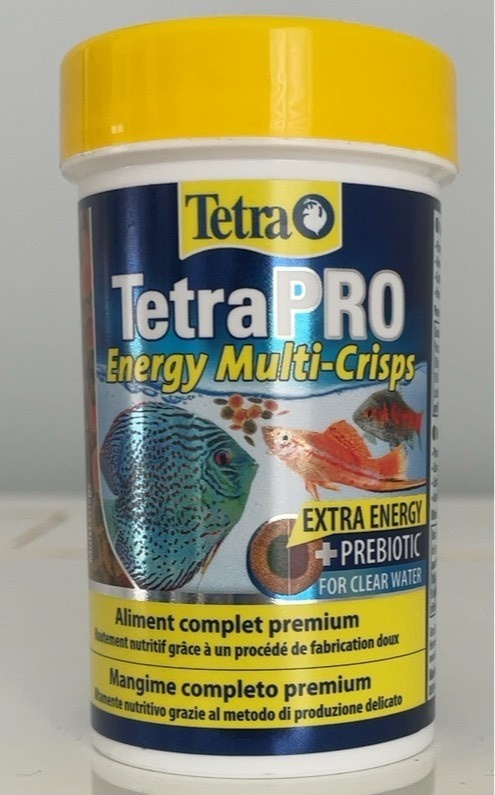
Dry food suited to the Combattant

Character
Daily temperament
The Betta is part of the labyrinthid family (currently Osphronemidae), meaning it has a labyrinth that allows it to come breathe air at the surface (this is why it lives in oxygen-poor waters). It is a very territorial fish, which earned it the name Siamese Fighting Fish or simply Betta. Males can be very bellicose toward each other and engage in violent fights, potentially leading to the death of the loser. This is due solely to selection by humans: current bettas have a serotonin deficit, genetically fixed through breeding for millennia (approximately 6,000 years that they have been raised in large bowls, selecting the most beautiful and especially the most aggressive). Because of this, they are sometimes very difficult to breed, as males are capable of killing their females as well, confusing parading to impress with attacking to kill. Humans have condemned it to solitude; that said, there are increasingly Betta splendens with more flexible behavior, capable of living with small gregarious fish with similar parameters, the fighting criterion being progressively abandoned. Females are generally duller, although nowadays more and more colored females are encountered, highly prized by breeding selection. Their fins, however, remain shorter, although some selected females are starting to have veil fins sometimes almost as long as those of young males. There is a form of short-finned male betta called Plakat. A novice may not distinguish between a short-finned male and a female; the major difference to distinguish a short-finned male from a female, regardless of its original form, is that a plakat male has a very visible point at the end of its ventral fin (also called anal fin), whereas in females, generally, it is much more rounded.
Read more (363 mots)Show less▾
The breeding period in Betta splendens is stressful and can weaken both male and female. The male builds a bubble nest by choosing preferably a location where there is vegetation. When the female is ready to spawn, the bands on the flanks become vertical (and not horizontal, a sign of obvious stress), the white genital papilla is clearly visible, the female swims by swaying in "S" and bows her head, thus giving the male the signal that courtship can begin. Mating generally takes place after a period of chases with frequent fin bites depending on the reactivity of the partners. Then, the male becomes gentler and attracts the female under the nest before embracing her to expel the eggs from her belly. The eggs sink to the bottom and the male must quickly recover them in his mouth and place them in the nest before the female attempts to devour them. Spawning can last three or four hours, with multiple embraces. As soon as mating ends, the male chases the female, considered (rightly) as a danger to the offspring. The male takes sole care of the nest, eating unfertilized or dead eggs and caring for the others. The eggs hatch after 36-48 hours of incubation; the newborns will, during the 3 to 4 first days after hatching, resorb their yolk sac, unable to swim, hanging with their heads attached to the bubble nest and their tails toward the ground. The male will watch over them and will recover them if they sink, until the little ones reach free-swimming and move away from the male before he takes his children for prey. They in turn feed on small living prey. From the 3rd to the 6th week of their life, the labyrinth (auxiliary breathing organ of Osphronemidae) is in full formation in the babies. They are then very fragile to external weather. After approximately three months, the differentiation
Physical
Breed standard
In the wild, the Betta is a species that measures on average 4 cm in length and more rarely up to 6.5 cm. The wild form has short fins and a brownish color, with only a few traces of green or red. Originally, when they chase an opponent to protect their territory, they are not fish that fight to the death. The wild variety merely intimidates by parading to impress the conspecific and make it flee, unlike animals selected for fighting by humans, which can sometimes even kill a female.
Living conditions
What living situation?
Siamese fighting fish are endemic to Thailand, particularly the Chao Phraya River basin which extends over a large part of the country's center; however, their natural range extends throughout the Mekong Basin, including Cambodia, Laos, and Vietnam. They are also found throughout the neighboring Malay Peninsula and in adjacent parts of Sumatra, probably due to human introduction. The worldwide popularity of the betta has led to its release and establishment in similar tropical areas, notably southeast Australia, Brazil, Colombia, Dominican Republic, southeast United States, and Singapore. Wherever they are found, Siamese fighting fish generally inhabit shallow bodies of water with abundant vegetation, including marshes, floodplains, and rice paddies. The historical prevalence of rice cultivation in Southeast Asia, which provided ideal habitat for bettas, led to their discovery and subsequent domestication by humans. The combination of shallow water and high air temperature causes rapid evaporation of gases, resulting in a significant oxygen deficit in the betta's natural habitat. This environment probably led to the evolution of the lung-like labyrinth organ, which allows Siamese fighting fish - like all members of the suborder Anabantoidei - to breathe directly from the air. Subsequently, bettas can live and even thrive in more challenging environments than other freshwater fish, which in turn leaves them with fewer natural predators and competitors. The tropical climate of the betta's natural habitat is characterized by sudden and extreme fluctuations in water availability, chemistry, and temperature. Water pH can range from slightly acidic (pH 6.9) to highly alkaline (pH 8.2), while air temperatures drop as low as 15°C (59°F) and rise to 40°C (100°F). Consequently, Siamese fighting fish are highly adaptable and hardy, capable of tolerating a variety of difficult or toxic environments; this explains their popularity as pets, as well as their ability to successfully colonize bodies of water around the world. Wild bettas prefer to live in bodies of water teeming with aquatic vegetation and surface foliage, such as dead leaves and water lilies. The abundance of plants provides security against predators and a buffer between aggressive males, which coexist by claiming dense sections of plants as territory. Such vegetation also provides protection to females during spawning and to fry during their earliest and most vulnerable stages.
Chapter 2
Daily life
What if you adopted your future companion?
The Combattant of your dreams may already be waiting in a shelter. Hundreds of combattant (and equally wonderful crossbreeds) are looking for a family in France — every adoption starts a new story.
Editorial recommendation — no affiliate links.
Âge
What human age for a combattant ?
The calculator is already set to the breed's adult size (espérance de vie 3–8 ans). Drag the slider to see the equivalence and corresponding life stage.
Equivalent human age
52years
Mature
Metabolism slows down. Monitor weight and early signs of joint stiffness, and have teeth checked.
Estimate: Proportional estimate: a reference life expectancy of 5 years, scaled to an 80-year human life. No reference veterinary table exists for this species.
These equivalences are statistical benchmarks drawn from published veterinary tables. Every animal ages at its own pace, depending on genetics, diet and care. This calculator is neither a diagnosis nor veterinary advice.
Alert
To avoid for fish
Our database lists toxic ingredients and problematic additives by species.
- Pacific tunaModerate
- Copper sulphateModerate
- red meatModerate
- breadLow
Nutrition
Feed your pet well
In its natural environment, the Betta is a carnivorous predator; it feeds on small living prey, such as daphnia, artemia, banana worms, and if bought in a pet store as flakes or pellets. In captivity, the latter must follow a meat-based diet.
Calculator · daily ration
How much to give a combattant ?
Estimate based on the veterinary formula RER × DER, adjusted for fish. Adjust according to package recommendations.
Estimate not available for this species.
Appears in
Combattant in our rankings
Very small fish breeds
5 breeds ranked by size
See the rankingFish species with the longest lifespans
Maximum documented lifespan — 8 years for the Betta
See the rankingFish species with the lowest energy requirements
9 low-energy breeds
See the rankingSmall aquarium fish
9 compact species suited to urban life
See the rankingBest exotic pets for beginners
First exotic animal — where to start?
See the rankingThe best small animals for apartments
Compact, discreet, perfect without a garden.
See the rankingFAQ
Frequently asked questions about Combattant
How long does a Betta live?+
Is the Betta suitable for beginners?+
What basic equipment should I plan for?+
If you like this fish
Breeds with similar profiles

Discus
Aquarium fish, specific biotope.

Lichnochromis acuticeps
Versatile format, balanced qualities

Hemichromis fasciatus
fish species

Buccochromis atritaeniatus
species of fish

Acanthopsoides
genus of fish

Poecilia formosa
fish
The right score for your Combattant.
SokoScan calculates a personalized PawScore based on breed, age, weight and your pet's sensitivities. Free, instant.