
🐶 Dog · size Medium
Alaskan Malamute
Alaskan dog breed
Photo · Wikipedia FR (CC BY-SA)
Weight
5–30 kg
Size
Medium
Lifespan
11–14 ans
Energy
Très élevé
Coat
Bicolour, usually varying from light grey to black.
Maintenance
Élevé
Training
Moyen
The Alaskan Malamute is a dog breed originating from Alaska.
Profile
At a glance
Energy
Très élevé
Trainability
Modéré
Maintenance
Élevé
Indicative profile — every animal is an individual.
⚡ Key facts in 30 seconds
L'essentiel
- 1Medium size (5–30 kg) — balance between presence and practicality.
- 2Lifespan: 11 to 14 years on average, depending on hygiene and diet.
- 3Very high energy level — plan for 1.5+ hours of daily activity minimum.
- 4Regular grooming — brushing 3 to 5 times per week.
Chapter 1
Getting to know the Alaskan Malamute
Our selection
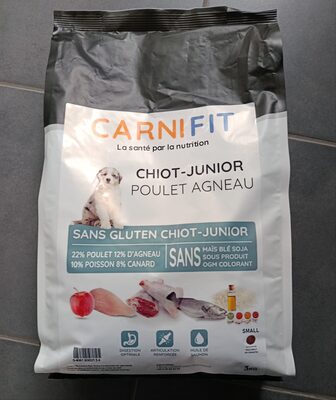
Dry food suited to the Alaskan Malamute
Character
Daily temperament
Alaskan Malamutes are still used as sled dogs for personal transportation, hauling freight or to help move light objects; some, however, are used for recreational sledding, also known as mushing, as well as skijoring, bikejoring, carting, and canicross. However, most Malamutes today are kept as pets or as show dogs or performance dogs in weight pulling, dog agility, or freighting. Malamutes, like other northern and sled dog breeds, can have a strong prey drive, because of their origins and breeding. This can mean that in some cases, they will pursue small animals, including other canids, as well as rabbits, squirrels and cats. Although Malamutes are, as a general rule, particularly friendly with people and can be trained to tolerate small pets, it is necessary to remain vigilant with them around small animals and young children. Malamutes are very affectionate toward people, a characteristic that makes them particularly sought-after family dogs, but unreliable guard dogs because they do not tend to bark. Malamutes are agile around furniture and small objects, making them ideal house dogs, provided they spend a lot of time outdoors to meet their important exercise needs. Alaskan Malamutes also often participate in animal therapy programs, such as visiting patients in hospitals, because of their gentle nature. If they are year-round outdoor dogs, letting them play in a small pool filled with cold water in summer keeps them cool. In winter, they prefer snow. Malamutes are generally calm dogs that rarely bark. When a Malamute vocalizes, it often seems to "speak" by producing a "woo woo" sound. A similarly appearing Spitz dog, the Siberian Husky, is much more vocal.
Physical
Breed standard
The American Kennel Club (AKC) breed standard describes a natural range of sizes, with a desired height of 23 inches (58 cm) and 75 pounds (34 kg) for females, 25 inches (64 cm) of height and 85 pounds (39 kg) for males. Heavier individuals (90 lb (41 kg)) and dogs under 75 pounds (34 kg) are commonly observed. There is often a marked size difference between males and females. Weights exceeding 100 pounds (45 kg) are also observed. The Alaskan Malamute's coat is a double coat. The undercoat has an oily and woolly texture and can measure up to two inches thick. The outer guard coat is coarse and stands on the body, longer at the withers but no more than an inch on the sides of the body. The ears are small in proportion to the head and remain firmly erect when alert. The Alaskan Malamute is a heavy dog, with a more imposing nature and structure than the Siberian Husky, which is bred for speed. The Alaskan Malamute is bred for power and endurance, which are its original function and what the breed standard requires of Alaskan Malamute breeders. Usual colors are various shades of grey and white, sable and white, black and white, seal and white, red and white, or solid white. There is a wide variety of markings in the breed, including facial markings, blazes, a spot on the nape, and a collar or half-collar. White is often the predominant color on the body, some parts of the legs, feet, and part of facial markings. In terms of color variants, some Malamutes display a dark grey to fawn shade around their trimmings and white areas, displaying a gene linked to color known as Agouti. Two agouti alleles, with the possibility of a third, seem to be found in Malamutes: aw (Agouti Pattern or Wolf/Wild Pattern), at (Tan Point Pattern or Black Pattern), and awat (Heterozygous Agouti or Dark Agouti). The Alaskan Malamute's eyes are almond-shaped and are various shades of brown; however, the darker eye is preferred. Pure-bred Alaskan Malamutes will not have blue eyes. The Malamute's physical build is compact and strong with substance, bone and snowshoe feet. According to the AKC breed standard, the Malamute's tail is well-haired and is carried on the back like a waving plume. Corkscrew tails are sometimes observed, but are considered a fault in the AKC breed standard (a corkscrew tail is commonly observed in the Akita). The well-haired tails of Malamutes help them stay warm when they curl up in the snow. They are often seen wrapping their tails around their nose and face, which probably protects them against the elements, such as blowing snow. Their ears are usually erect, wedge-shaped, small in proportion to the head and placed on the side of the skull. The muzzle is deep and broad, tapering slightly from the skull to the nose. The nose and gums are black, but some Malamutes have a "snow nose," which is black with a pink shade that can darken or lighten depending on the season.
Chapter 2
Daily life
What if you adopted your future companion?
The Alaskan Malamute of your dreams may already be waiting in a shelter. Hundreds of alaskan malamute (and equally wonderful crossbreeds) are looking for a family in France — every adoption starts a new story.
Editorial recommendation — no affiliate links.
Âge
What human age for a alaskan malamute ?
The calculator is already set to the breed's adult size (espérance de vie 11–14 ans). Drag the slider to see the equivalence and corresponding life stage.
10 à 22 kg — a giant dog ages significantly faster than a small dog after maturity.
Equivalent human age
29years
Adulte
Most stable period. Monthly weigh-in, annual vet visit, dental care — this determines quality of life in later years.
Method: AVMA table: 15 human years in year one, +9 in year two, then +5 per year for a moyen dog.
These equivalences are statistical benchmarks drawn from published veterinary tables. Every animal ages at its own pace, depending on genetics, diet and care. This calculator is neither a diagnosis nor veterinary advice.
Health
Health watch
Il n'existe qu'une seule enquête de santé connue sur les Malamutes d'Alaska, une enquête du UK Kennel Club de 2004 avec un échantillon de seulement 14 chiens. L'espérance de vie médiane de 10,7 ans mesurée dans cette enquête est typique d'une race de leur taille ; cependant, cette étude avait un échantillon trop petit pour être considérée comme fiable, et de nombreuses preuves anecdotiques suggère
Read more (318 mots)Show less▾
nt qu'ils ont en moyenne l'une des plus longues espérances de vie des grands chiens, jusqu'à 15 ans. La principale cause de décès était le cancer (36%). Les problèmes de santé les plus couramment signalés chez les Malamutes d'Alaska, dans l'enquête du UK Kennel Club de 2004 (basée sur un échantillon de 64 chiens), étaient musculosquelettiques (dysplasie de la hanche), et les cataractes héréditaires. Il existe d'autres problèmes de santé dans la race, dont les origines sont inconnues, notamment les troubles convulsifs, observés chez les jeunes chiots comme chez les adultes, l'épilepsie, les problèmes cardiaques congénitaux, les problèmes rénaux et les troubles cutanés. D'autres problèmes de santé chez les Malamutes incluent la dysplasie du coude, la polyneuropathie héréditaire chez les chiens et les chats, l'ostéochondrodysplasie, l'hypoplasie cérébelleuse chez les animaux non humains, les malformations cardiaques et les problèmes oculaires (en particulier la cataracte et l'atrophie rétinienne progressive). Un problème croissant parmi les races de chiens arctiques, y compris le Malamute d'Alaska, mais surtout leur cousin, le Samoyède, est le diabète canin, dont l'apparition survient généralement à l'âge moyen (5 à 7 ans). Un autre problème de santé chez les Malamutes est la carence en zinc. Cette race ne peut pas facilement absorber le zinc, et des infections, ainsi que des problèmes de peau et de pelage peuvent survenir. Les troubles de la thyroïde sont les problèmes hormonaux les plus courants chez les chiens, et l'hypothyroïdie est courante chez les Malamutes.
Alert
To avoid for dog
Our database lists toxic ingredients and problematic additives by species.
- low-fat cocoa powderModerate
- maltitolModerate
- cocoa pasteModerate
- onion piecesModerate
Calculator · daily ration
How much to give a alaskan malamute ?
Estimate based on the veterinary formula RER × DER, adjusted for dog. Adjust according to package recommendations.
Result
221 g
per day · 839 kcal
111 g / repas (2 par jour)
Calculation for food of 380 kcal/100g.
Appears in
Alaskan Malamute in our rankings
FAQ
Frequently asked questions about Alaskan Malamute
Is the Alaskan Malamute suitable for apartment living?+
How much exercise per day does an Alaskan Malamute need?+
What is the lifespan of an Alaskan Malamute?+
Is the Alaskan Malamute good with children?+
If you like this dog
Breeds with similar profiles


For more information
Sources & official links
Supplementary documentation on reference sites — breed clubs, encyclopedias, veterinarians.
The right score for your Alaskan Malamute.
SokoScan calculates a personalized PawScore based on breed, age, weight and your pet's sensitivities. Free, instant.