
🐶 Dog · size Medium
Lakeland Terrier
Terrier breed
Photo · Wikipedia FR (CC BY-SA)
Weight
5–30 kg
Size
Medium
Lifespan
11–14 ans
Energy
Élevé
Origin
Angleterre
Coat
Black and tan, blue and tan, red, wheaten, red grizzle, brown (liver), blue or black. Small white marks allowed.
Maintenance
Faible
Training
Moyen
The Lakeland Terrier is one of many terrier breeds that finds its origin in the lakes region in the northeast of England. It is one of the descendants of the ancient black and tan English Terrier, once used in the countryside to hunt vermin. The Lakeland Terrier emerged in the 1800s in the English region of Cumberland, near the Scottish border. The breed is linked to other terrier breeds, and is one of the oldest working terrier breeds still in use today.
Read more (129 mots)Show less▾
Besides the ancient black and tan English Terrier, its ancestors include the early Dandie Dinmont Terriers, the Bedlington Terrier and the Border Terrier. For generations, the Lakeland was used in the lakes region to exterminate foxes that attacked newborn lambs during lambing season. While most other terrier breeds were satisfied with seizing their prey while running or barking to signal vermin, the Lakeland was employed to kill the fox in its burrow. The qualities of courage, combativeness and aggressiveness that result from this for the breed are nevertheless compatible with those expected today of a companion dog, calm and friendly.
Profile
At a glance
Energy
Élevé
Trainability
Modéré
Maintenance
Faible
Indicative profile — every animal is an individual.
⚡ Key facts in 30 seconds
L'essentiel
- 1Medium size (5–30 kg) — balance between presence and practicality.
- 2Life expectancy: 11 to 14 years on average, depending on hygiene and diet.
- 3High energy level — at least 1 hour of activity per day for balance.
- 4Minimal maintenance — low shedding, occasional brushing.
Chapter 1
Getting to know the Lakeland Terrier
Our selection
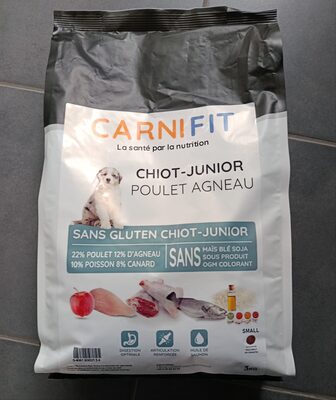
Dry food suited to the Lakeland Terrier
Origins & history
A story told
Around 1925, the breed began to achieve a good level of homogeneity, after crosses with the Fox Terrier and the Airedale. The British Kennel Club recognized the breed in 1928 and it was presented to the public at competitions organized by the Lakeland Terrier Club (later Lakeland Terrier Society), under the auspices of the Kennel Club, from 1932. The configuration of the lakes region, birthplace of the breed, very mountainous and with very rocky terrain, prohibited fox hunting on horseback, forcing inhabitants to practice hunt on foot. Unlike the Fox Terrier, which was transported in a bag attached to the horse's saddle and released when the fox had been cornered, the Lakeland had to travel long distances alongside hounds, which could explain its enthusiasm and resistance. The working version of the Lakeland is known as the Fell Terrier or Patterdale Terrier.
Character
Daily temperament
The Lakeland is a dog with a friendly, cheerful, fearless and confident temperament. Shyness is a truly atypical trait for the breed, as is aggression. This dog is intelligent, but also independent. It is easy to train and learns very quickly, despite a propensity for selective deafness when its attention is distracted. The Lakeland is a discreet dog, which does not bark without reason. It seeks to satisfy its owner. The Lakeland remains today well-suited for fox and rabbit hunting. It remains a very effective vermin hunter.
Physical
Breed standard
The Lakeland resembles the Welsh Terrier while being slightly smaller and more gracile in bone structure. The height must not exceed 37 cm at the withers. The ideal weight is 7.7 kg for a male, 6.8kg for a female. Grizzled red Lakelands can thus be mistaken for miniature Airedales. The Lakeland has a hard coat and silky undercoat. The breed comes in a wide variety of coats: black and tan, blue and tan, red, wheat, red grizzled, brown (liver), blue or black. Small touches of white on the feet and chest are permitted, but not sought. Mahogany and bright fawn are not typical colors. The breed is known for not shedding. The eyes are dark or hazel in color. The nose and pads are black, except in subjects with brown (liver) coat where they are brown.
What if you adopted your future companion?
The Lakeland Terrier of your dreams may already be waiting in a shelter. Hundreds of lakeland terrier (and equally wonderful crossbreeds) are looking for a family in France — every adoption starts a new story.
Editorial recommendation — no affiliate links.
Âge
What human age for a lakeland terrier ?
The calculator is already set to the breed's adult size (espérance de vie 11–14 ans). Drag the slider to see the equivalence and corresponding life stage.
10 à 22 kg — a giant dog ages significantly faster than a small dog after maturity.
Equivalent human age
29years
Adulte
Most stable period. Monthly weigh-in, annual vet visit, dental care — this determines quality of life in later years.
Method: AVMA table: 15 human years in year one, +9 in year two, then +5 per year for a moyen dog.
These equivalences are statistical benchmarks drawn from published veterinary tables. Every animal ages at its own pace, depending on genetics, diet and care. This calculator is neither a diagnosis nor veterinary advice.
Alert
To avoid for dog
Our database lists toxic ingredients and problematic additives by species.
- low-fat cocoa powderModerate
- maltitolModerate
- cocoa pasteModerate
- onion piecesModerate
Calculator · daily ration
How much to give a lakeland terrier ?
Estimate based on the veterinary formula RER × DER, adjusted for dog. Adjust according to package recommendations.
Result
221 g
per day · 839 kcal
111 g / repas (2 par jour)
Calculation for food of 380 kcal/100g.
FAQ
Frequently asked questions about Lakeland Terrier
Is the Lakeland Terrier suitable for apartment living?+
How much exercise per day for a Lakeland Terrier?+
What is the life expectancy of a Lakeland Terrier?+
Is the Lakeland Terrier good with children?+
If you like this dog
Breeds with similar profiles


For more information
Sources & official links
Supplementary documentation on reference sites — breed clubs, encyclopedias, veterinarians.
The right score for your Lakeland Terrier.
SokoScan calculates a personalized PawScore based on breed, age, weight and your pet's sensitivities. Free, instant.