
🐶 Dog · size Small
Norwegian Puffin Dog
dog breed
Photo · Wikipedia FR (CC BY-SA)
Weight
6.8–9.2 kg
Size
Small
Lifespan
12–16 ans
Energy
Très élevé
Origin
Norvège
Coat
Fawn, white, scattered with black hair
Maintenance
Faible
Training
Moyen
The Norwegian Puffin Dog or Lundehund is a dog breed originating from Norway. It is a spitz-type dog with typical physical characteristics: its ears have the peculiarity of closing, it is a very flexible dog, and it possesses a supernumerary digit on its front feet. Used for puffin hunting in Norway, the breed nearly disappeared during the 20th century.
Profile
At a glance
Energy
Très élevé
Trainability
Modéré
Maintenance
Faible
Indicative profile — every animal is an individual.
⚡ Key facts in 30 seconds
L'essentiel
- 1Small size (6.8–9.2 kg), adapts to most living spaces.
- 2Life expectancy: 12 to 16 years on average, depending on maintenance and diet.
- 3Very high energy level — plan for 1h30+ of daily exercise minimum.
- 4Minimal maintenance — minimal shedding, occasional brushing.
Chapter 1
Getting to know the Norwegian Puffin Dog
Our selection
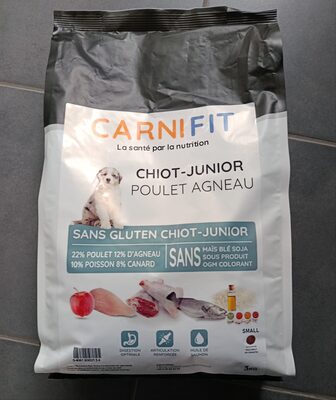
Dry food suited to the Norwegian Puffin Dog
Origins & history
A story told
The Norwegian Puffin Dog is an ancient breed. The first written records date back to the 16th century, from the pen of provost Erik Hansen Schonnebol. In the 18th century there were some writings about the Norwegian Puffin Dog, from Helgeland to Finnemark. The most famous is found in the book Trumpet of Nordland by poet-pastor Petter Dass, where he recounts the hunting of puffins on the island of Lovund in 1700. He describes it, in verse, as follows: "But the peasants who have a tactic, know how to hunt these birds. To do this, they use specially trained dogs, flexible by nature and of small size, which introduce themselves into deep lairs and extract live puffins."[citation needed] In the islands of northern Norway (Lofoten), the population lived from fishing and small farming and used the Norwegian Puffin Dog to hunt puffins, from May to mid-June and then in August for two to three weeks. The bird provided them with meat to supplement their diet and down to make pillows and quilts. The description made of it is that of a small, highly agile dog. During the hunting season, each dog could bring back about a hundred birds per day. With the use of nets and increasingly high taxes, the Norwegian Puffin Dog lost interest in the mid-19th century[citation needed]. In 1939, Eleanor Christie began rescuing the breed, gathering a small population from Måstad, island of Værøy. During World War II and into the 1950s, most of the dogs were decimated by distemper. Interest in the breed was nevertheless revived and the Norsk Lundehund Klubb was founded in 1962.
Character
Daily temperament
The Norwegian Puffin Dog is described in the FCI standard as alert, energetic and lively. It is a small, very peaceful dog, very cheerful that loves company. A bit stubborn, it educates itself with patience and gentleness.
Physical
Breed standard
The Norwegian Puffin Dog is a spitz-type breed of rectangular format, small size and relatively lightweight. This breed is very flexible: its elasticity allows it to contort at the neck level, allowing the head to touch almost the back. The back is strong and straight with a slightly inclined croup. The chest of medium width is long, quite deep and spacious; it should not be barrel-shaped. The neck is medium length, fairly strong with a rather developed ruff. The tail is set high, rather short, with full hair but without fringe. It is carried in a ring or slightly rolled over the back, or even pendulous. The front limbs are slightly angulated with strong forearms. They are extremely flexible, allowing the dog to do the splits. The hind limbs are moderately angulated, strong with muscled thighs. The feet are oval and slightly turned outward. The Norwegian Puffin Dog possesses six digits with five that must support the ground for the front limbs against four for the hind limbs. The gait is light and elastic. An outward rotational movement of the front limbs and a slightly tight movement of the hind limbs are characteristic of the breed. The head of medium width is equipped with a slightly domed skull with prominent brow ridges. The medium-length muzzle is wedge-shaped, with the muzzle slightly convex. The stop is pronounced but not exaggerated. The eyes are slightly almond-shaped, the iris is amber colored with a dark brown line around the pupil. The ears are triangular in shape, carried erect. They have the peculiarity of having a cartilage that retracts: the ears fold and bend in a specific way, either towards the back or at right angles upward to close the ear canal to make them water-tight and dirt-resistant. The topcoat is dense and harsh, short on the head and front of limbs, but full around the neck and behind the thighs. The undercoat is soft. The color is reddish to fawn always combined with white, more or less interspersed with black-tipped hairs.
Chapter 2
Daily life
What if you adopted your future companion?
The Norwegian Puffin Dog of your dreams may already be waiting in a shelter. Hundreds of norwegian puffin dog (and equally wonderful crossbreeds) are looking for a family in France — every adoption starts a new story.
Editorial recommendation — no affiliate links.
Âge
What human age for a norwegian puffin dog ?
The calculator is already set to the breed's adult size (espérance de vie 12–16 ans). Drag the slider to see the equivalence and corresponding life stage.
5 à 9 kg — a giant dog ages significantly faster than a small dog after maturity.
Equivalent human age
28years
Adulte
Most stable period. Monthly weigh-in, annual vet visit, dental care — this determines quality of life in later years.
Method: AVMA table: 15 human years in year one, +9 in year two, then +4 per year for a petit dog.
These equivalences are statistical benchmarks drawn from published veterinary tables. Every animal ages at its own pace, depending on genetics, diet and care. This calculator is neither a diagnosis nor veterinary advice.
Health
Health watch
It must have a diet with a reduced percentage of fat, as this breed suffers from a problem with fat assimilation which can lead to lymphangiectasia[citation needed].
Alert
To avoid for dog
Our database lists toxic ingredients and problematic additives by species.
- low-fat cocoa powderModerate
- maltitolModerate
- cocoa pasteModerate
- onion piecesModerate
Calculator · daily ration
How much to give a norwegian puffin dog ?
Estimate based on the veterinary formula RER × DER, adjusted for dog. Adjust according to package recommendations.
Result
123 g
per day · 466 kcal
62 g / repas (2 par jour)
Calculation for food of 380 kcal/100g.
FAQ
Frequently asked questions about Norwegian Puffin Dog
Is the Norwegian Puffin Dog suitable for apartment living?+
How much exercise per day for a Norwegian Puffin Dog?+
What is the life expectancy of a Norwegian Puffin Dog?+
Is the Norwegian Puffin Dog good with children?+
If you like this dog
Breeds with similar profiles

Thai Bangkaew
dog breed

Bichon Frisé
Small dog breed with a unique character.

Bichon Maltais
Small dog breed with unique character.

Affenpinscher
dog breed

Akita américain
dog breed

American Hairless terrier
dog breed
For more information
Sources & official links
Supplementary documentation on reference sites — breed clubs, encyclopedias, veterinarians.
The right score for your Norwegian Puffin Dog.
SokoScan calculates a personalized PawScore based on breed, age, weight and your pet's sensitivities. Free, instant.