
🐶 Dog · size Large
Portuguese Pointer
dog breed
Photo · Wikipedia FR (CC BY-SA)
Weight
20.4–27.6 kg
Size
Large
Lifespan
9–12 ans
Energy
Moyen
Coat
Jaune et marron, unicolore ou marqué de blanc.
Maintenance
Moyen
Training
Moyen
The Portuguese Pointer is a dog breed originating from Portugal.
Profile
At a glance
Energy
Modéré
Trainability
Modéré
Maintenance
Modéré
Indicative profile — every animal is an individual.
⚡ Key facts in 30 seconds
L'essentiel
- 1Large size (20.4–27.6 kg): plan for space, exercise, and food budget.
- 2Lifespan: 9 to 12 years on average, depending on maintenance and diet.
- 3Moderate energy — 30 to 60 minutes of exercise per day is sufficient.
- 4Moderate maintenance — weekly brushing is sufficient.
Chapter 1
Getting to know the Portuguese Pointer
Our selection
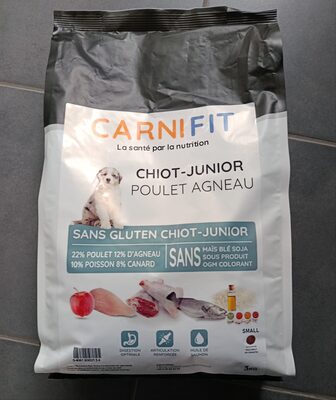
Dry food suited to the Portuguese Pointer
Origins & history
A story told
The Portuguese Pointer descended from the old indigenous Iberian hunting dog, known in Portugal with the same morphology and function until today and at least since the tenth century. The same square head with convergent axes and marked stop, same ears, same body, sometimes docked tail, especially since the seventeenth century, with always the same hunting scenes, almost always represented at point, sometimes stretched at the end of a leash, and all of this for 1,000 years... Used for feather hunting with nets, and also for marking and retrieving wounded game, it was first raised in royal kennels or those of nobility. Its image can be found almost everywhere, in stone plaques (Tomar, tenth century), Portuguese bibles (Coimbra and Porto), glazed tiles (Estremoz and Lisbon), as well as in paintings. In the sixteenth century its use spread among the common classes, and its excellent hunting qualities developed to the detriment of the interests of the seigniorial class, to the point that the Lisbon Hunting Reserve Regulations severely punished those who owned these dogs. In the eighteenth century, the English colony that trades in Port wine discovers this dog in the north of the country and ships numerous Portuguese Pointers to England, which form the basis of the Pointer (Cynographia Britannica, 1800). Indeed, in the history of hunting dogs one can find only two breeds with convergence of the skull and muzzle axes and a similar head, in the Portuguese Pointer (oldest breed) and in the Pointer, a breed described only since the eighteenth century. In the last years of the nineteenth century, a difficult period in Portuguese social life, when triumphant liberalism introduced different ideas and tastes imported from outside, the breed declined. However, at the beginning of the twentieth century, some breeders endeavored to recover the Portuguese Pointer from subjects considered typical in the north of the country, with a book of origins existing since 1932, and the first standard written in 1931 and accepted in 1938.
Character
Daily temperament
The Portuguese Pointer is described in the FCI standard as gentle and affectionate, rustic and capable of great endurance and great devotion. It is calm and sociable, but can be distant with other dogs.
Physical
Breed standard
The Portuguese Pointer is a medium-lined pointer of harmonious and well-constituted appearance. The tail is generally docked by one third when tail docking is authorized by legislation. Whole, it does not exceed the hock. The head is covered with loose, fine skin without wrinkles. The superior longitudinal craniofacial axes are convergent. The ears of medium length are thin, flexible, and covered with fine and dense hair. Darker brown than the coat color, the eyes are almost round oval in shape. The coat is short, strong, well-laid, and dense, without undercoat. It is shorter and softer on the head and especially on the ears. At the armpits, in the groin folds, on the anal and genital regions, the coat is sparser and soft. The coat colors are yellow and brown, unicolor or marked with white.
What if you adopted your future companion?
The Portuguese Pointer of your dreams may already be waiting in a shelter. Hundreds of portuguese pointer (and equally wonderful crossbreeds) are looking for a family in France — every adoption starts a new story.
Editorial recommendation — no affiliate links.
Âge
What human age for a portuguese pointer ?
The calculator is already set to the breed's adult size (espérance de vie 9–12 ans). Drag the slider to see the equivalence and corresponding life stage.
23 à 44 kg — a giant dog ages significantly faster than a small dog after maturity.
Equivalent human age
30years
Adulte
Most stable period. Monthly weigh-in, annual vet visit, dental care — this determines quality of life in later years.
Method: AVMA table: 15 human years in year one, +9 in year two, then +6 per year for a grand dog.
These equivalences are statistical benchmarks drawn from published veterinary tables. Every animal ages at its own pace, depending on genetics, diet and care. This calculator is neither a diagnosis nor veterinary advice.
Alert
To avoid for dog
Our database lists toxic ingredients and problematic additives by species.
- low-fat cocoa powderModerate
- maltitolModerate
- cocoa pasteModerate
- onion piecesModerate
Calculator · daily ration
How much to give a portuguese pointer ?
Estimate based on the veterinary formula RER × DER, adjusted for dog. Adjust according to package recommendations.
Result
280 g
per day · 1063 kcal
140 g / repas (2 par jour)
Calculation for food of 380 kcal/100g.
Appears in
Portuguese Pointer in our rankings
FAQ
Frequently asked questions about Portuguese Pointer
Is the Portuguese Water Dog suitable for an apartment?+
How much exercise per day does a Portuguese Water Dog need?+
What is the lifespan of a Portuguese Water Dog?+
Is the Portuguese Water Dog good with children?+
If you like this dog
Breeds with similar profiles


For more information
Sources & official links
Supplementary documentation on reference sites — breed clubs, encyclopedias, veterinarians.
The right score for your Portuguese Pointer.
SokoScan calculates a personalized PawScore based on breed, age, weight and your pet's sensitivities. Free, instant.