
🐶 Dog · size Medium
Hungarian Shorthaired Pointer
dog breed
Photo · Wikipedia FR (CC BY-SA)
Weight
5–30 kg
Size
Medium
Lifespan
11–14 ans
Energy
Élevé
Origin
Hongrie
Coat
Froment-doré
Maintenance
Faible
Training
Moyen
The Hungarian Vizsla (in Hungarian: rövidszőrű magyar vizsla) is a dog breed originating from Hungary. It is a pointer of uniform fawn color. There is a wire-haired variety, of larger size, and considered a different breed: the Hungarian Wire-haired Vizsla. In its country of origin, the Vizsla quickly became popular as a versatile hunting dog. The Hungarian name magyar vizsla means in English: "pointer."
Profile
At a glance
Energy
Élevé
Trainability
Modéré
Maintenance
Faible
Indicative profile — every animal is an individual.
⚡ Key facts in 30 seconds
L'essentiel
- 1Medium size (5-30 kg) — balance between presence and practicality.
- 2Life expectancy: 11 to 14 years on average, depending on hygiene and diet.
- 3High energy level — at least 1 hour of daily activity for balance.
- 4Minimal maintenance — light shedding, occasional brushing.
Chapter 1
Getting to know the Hungarian Shorthaired Pointer
Our selection
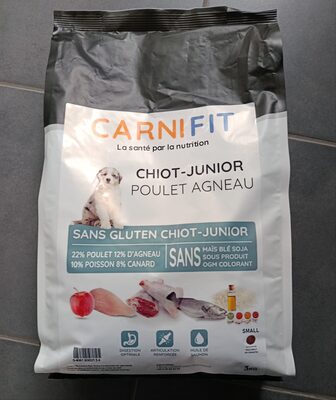
Dry food suited to the Hungarian Shorthaired Pointer
Origins & history
A story told
Of Hungarian origin, the Hungarian Vizsla is originally a dog of Hungarian nobility that would have followed the establishment of the Hungarian people. Its origins can be traced back to the first millennium BCE: it would be the result of a cross with Hungarian hunting hounds, perhaps the Pannonian hunting hound or the short-legged Transylvanian, and a yellow Turkish dog. The Sloughi was used as a contribution to this breed. Documents describing dogs resembling the Hungarian Vizsla have existed since the 14th century. Subjects of similar conformation are noted from the 17th century. At the end of the 19th century, pointer competitions were organized in Hungary in which the Hungarian Vizsla participated and it is likely that foreign hunting dog breeds played a role in its development. Pure breed breeding began in 1920. The Hungarian Vizsla was recognized by the International Canine Federation (FCI) in 1936 or 1954. The Hungarian Vizsla is well established in Hungary, Germany and the United States. The Hungarian Wire-haired Vizsla, which appeared more recently, is less well represented. In 2011, under the government of Viktor Orbán, a dog tax was adopted in Hungary from which the Hungarian Vizsla was exempt on the grounds of being "of Hungarian breed", in the sense of Greater Hungary.
Character
Daily temperament
The FCI standard describes the Hungarian Vizsla as lively in temperament, friendly, balanced and easy to train. It has an exceptional ability to maintain contact with its master. It does not tolerate being treated with brutality and must be neither aggressive nor timid. It nevertheless needs education. It adores children and knows how to be the friend of the whole family. Although an excellent companion dog, the Hungarian Vizsla is a hunting dog that needs plenty of exercise: apartment living requires several daily outings.
Physical
Breed standard
The Hungarian Vizsla is a pointer of medium size (approximately 60 cm for about thirty kilos), of rather light build, dry and without superfluous weight. The body length exceeds the height at the withers only slightly and the chest height is somewhat less than half the height at the withers. Attached a little low, the tail is strong at its base and then tapers gradually. When tail docking is not prohibited by law, the tail can be shortened by a quarter. In movement it is raised to horizontal. The head is dry, noble, well-proportioned with a moderately wide skull and slightly domed. The muzzle is a little shorter than half the length of the head. The eyes are somewhat oval in shape and medium in size. The eyelids fit the shape of the eyeball well. The brown color of the eyes matches the coat color, but darker eyes are preferred. The ears are positioned slightly back and attached at medium height. They are drooping and the tip of the ear forms a rounded V. The length of the ear measures approximately three-quarters of the length of the head. The hair is short and dense, it is rough and hard to the touch. The Hungarian Vizsla has no undercoat. On the head and ears it is finer, more silky and shorter. The tail is well covered with dense hair; on the underside of the tail it is very slightly longer. The hair covers the entire body and only the belly has somewhat sparser hair. The coat is solid fawn color, described as wheat-golden (semmelgelb). The ears can be of a darker shade. A small white mark on the chest or throat area, with a diameter not exceeding 5 cm, and white marks on the toes are not penalized.
What if you adopted your future companion?
The Hungarian Shorthaired Pointer of your dreams may already be waiting in a shelter. Hundreds of hungarian shorthaired pointer (and equally wonderful crossbreeds) are looking for a family in France — every adoption starts a new story.
Editorial recommendation — no affiliate links.
Âge
What human age for a hungarian shorthaired pointer ?
The calculator is already set to the breed's adult size (espérance de vie 11–14 ans). Drag the slider to see the equivalence and corresponding life stage.
10 à 22 kg — a giant dog ages significantly faster than a small dog after maturity.
Equivalent human age
29years
Adulte
Most stable period. Monthly weigh-in, annual vet visit, dental care — this determines quality of life in later years.
Method: AVMA table: 15 human years in year one, +9 in year two, then +5 per year for a moyen dog.
These equivalences are statistical benchmarks drawn from published veterinary tables. Every animal ages at its own pace, depending on genetics, diet and care. This calculator is neither a diagnosis nor veterinary advice.
Alert
To avoid for dog
Our database lists toxic ingredients and problematic additives by species.
- low-fat cocoa powderModerate
- maltitolModerate
- cocoa pasteModerate
- onion piecesModerate
Calculator · daily ration
How much to give a hungarian shorthaired pointer ?
Estimate based on the veterinary formula RER × DER, adjusted for dog. Adjust according to package recommendations.
Result
221 g
per day · 839 kcal
111 g / repas (2 par jour)
Calculation for food of 380 kcal/100g.
FAQ
Frequently asked questions about Hungarian Shorthaired Pointer
Is a Short-haired Hungarian Pointer suitable for apartment living?+
How much exercise per day for a Short-haired Hungarian Pointer?+
What is the life expectancy of a Short-haired Hungarian Pointer?+
Is a Short-haired Hungarian Pointer good with children?+
If you like this dog
Breeds with similar profiles


For more information
Sources & official links
Supplementary documentation on reference sites — breed clubs, encyclopedias, veterinarians.
The right score for your Hungarian Shorthaired Pointer.
SokoScan calculates a personalized PawScore based on breed, age, weight and your pet's sensitivities. Free, instant.